
University of North Texas’s Snapshot
~12
Online master’s programs
Varies
Per credit hour
Lower than peers
Texas public pricing
R1
Public research university
Key policies
Institution type
Public university
Regional accreditation
SACSCOC
Admissions model
Deadline-based (most) · Rolling (information science)
GRE/GMAT required
Not required (most programs)
Out-of-state premium
Varies by program
Notable Programmatic Accreditations
- AACSB
- ALA
- NASPAA
- ABAI

- Edited By Jeevan D'Souza
Start Here: Compare UNT by What Matters Most
- Compare institutional strengths → Particularly strong in information science (ALA-accredited), education, public administration, merchandising, and affordable AACSB-accredited business programs
- Compare accreditation → SACSCOC regional accreditation plus AACSB, ALA, NASPAA, and ABAI programmatic credentials across key disciplines
- Compare affordability → Texas public-university pricing with lower overall tuition than many flagship and private online competitors
- Compare student fit → Strongest for students seeking niche accredited programs, educator advancement pathways, and practical credential value over institutional prestige
- Compare alternatives → Texas A&M University, University of Houston, and Arizona State University
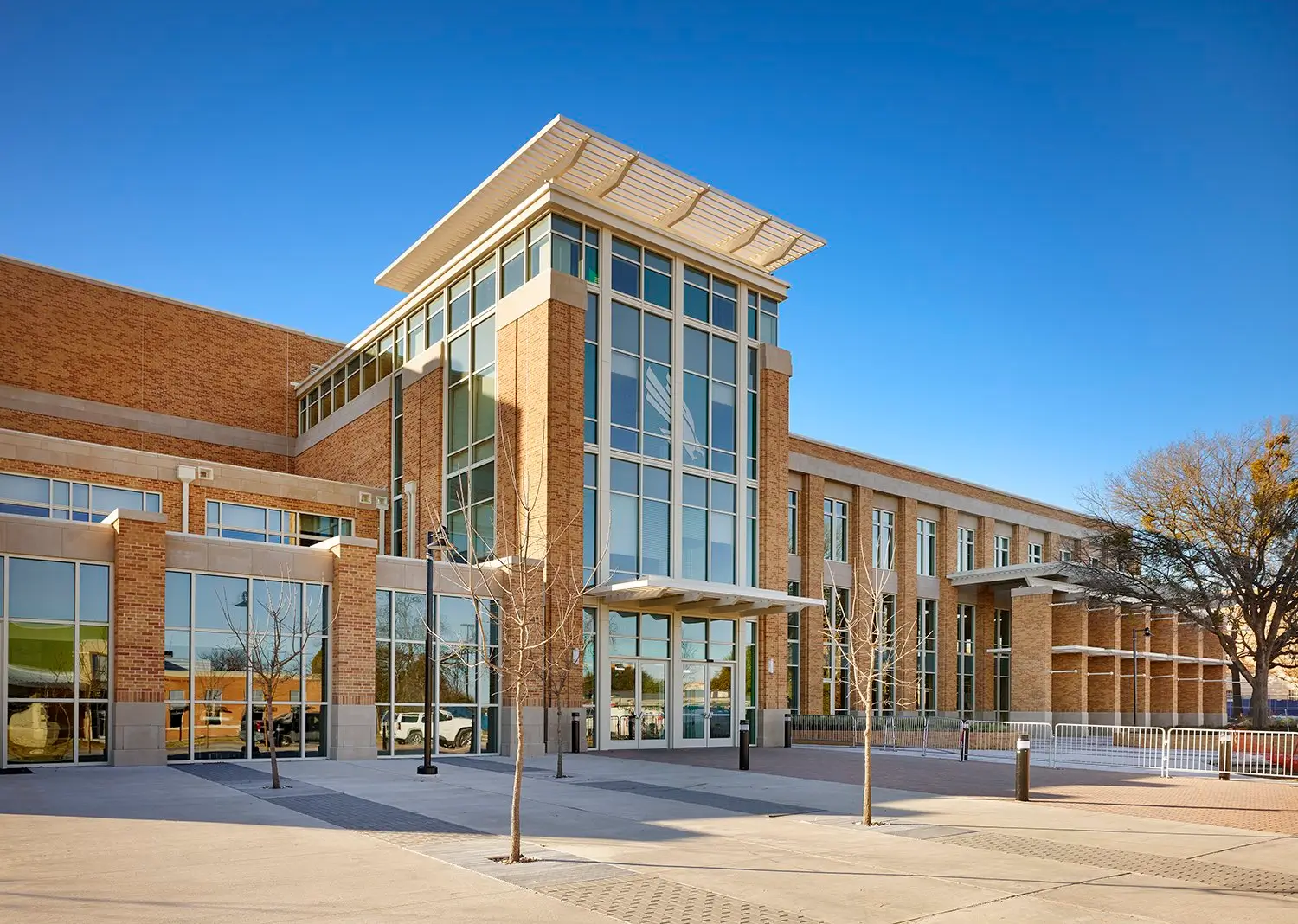
The University of North Texas (UNT) is a Carnegie R1 public research university located in Denton, Texas, within the Dallas–Fort Worth metroplex. Regionally accredited by the Southern Association of Colleges and Schools Commission on Colleges (SACSCOC), UNT serves roughly 44,000 students, making it one of the largest universities in Texas.
For online master’s students, the relevant picture is more focused. UNT offers approximately a dozen fully online master’s programs spanning business, education, information science, criminal justice, public administration, and emerging data fields. This isn’t a mega-catalog university — UNT’s online portfolio is selective, centered on areas where it has real programmatic depth and accreditation credentials.
What the University of North Texas Is Known For
UNT’s online master’s reputation rests on a few genuinely distinctive pillars rather than a broad scale.
Information Science / Library Science:
UNT’s MS in Information Science is one of the most recognized programs in its field online. It holds ALA (American Library Association) accreditation and is consistently ranked among the largest online MLIS/MSIS programs in the country. The program offers concentrations in data science, health informatics, digital content management, and youth services — a breadth that few competitors match in a single ALA-accredited online program.
Education:
UNT has deep roots in teacher preparation and educational leadership. Its online MEd programs in Curriculum and Instruction, Educational Leadership, and Learning Technologies serve a large population of working Texas educators seeking advancement without relocating. These programs don’t carry specialized accreditation beyond SACSCOC but benefit from UNT’s established pipeline to Texas school districts.
Business (AACSB-Accredited):
UNT’s G. Brint Ryan College of Business holds AACSB accreditation — the most selective business school accreditation globally, held by roughly 6% of business schools worldwide. The online MBA offers concentrations in strategic management, marketing, and organizational behavior/HR, with GMAT/GRE waivers available for qualified applicants. For students who want an AACSB-accredited online MBA at public university pricing, this is a meaningful credential.
Niche Strengths — Merchandising and Public Administration:
UNT’s MS in Merchandising is one of the very few fully online master’s programs in this field nationwide, with concentrations in digital retailing and luxury merchandising. The MPA program carries NASPAA accreditation, placing it in the top tier of public administration credentials.
Applied Behavior Analysis:
The MS in Applied Behavior Analysis has an ABAI-verified course sequence qualifying graduates for BCBA certification — a specific, high-demand credential path that not many online programs offer with this level of institutional backing.
Below is UNT’s current online master’s program portfolio, organized by subject area. Credit hours and timelines reflect standard program structures; tuition rates vary and should be confirmed directly with UNT.
Business
| Program | Degree | Credits | Duration | GRE Required | Accreditation | Notes |
|---|---|---|---|---|---|---|
| Master of Business Administration | MBA | 36 | 12–24 months | No (waiver available) | AACSB | Concentrations: Strategic Management, Marketing, OB/HRM |
| MS in Merchandising | MS | 36 | 18–24 months | No | — | Concentrations: Digital Retailing, Luxury Merchandising. One of few fully online programs in this field. |
IT & Data
| Program | Degree | Credits | Duration | GRE Required | Accreditation | Notes |
|---|---|---|---|---|---|---|
| MS in Information Science | MS | 36 | 18–36 months | No | ALA | Concentrations: Data Science, Health Informatics, Digital Content Management, Youth Services. One of the largest online ALA-accredited programs nationally. |
| MS in Artificial Intelligence | MS | 33 | 18–24 months | Unknown | — | Relatively new program — verify current availability. |
| MS in Data Science | MS | 33 | 18–24 months | Unknown | — | — |
Education
| Program | Degree | Credits | Duration | GRE Required | Accreditation | Notes |
|---|---|---|---|---|---|---|
| MEd in Curriculum and Instruction | MEd | 36 | 18–24 months | No | — | — |
| MEd in Educational Leadership | MEd | 36 | 18–24 months | No | — | Designed for aspiring principals and school administrators. |
| MEd in Learning Technologies | MEd | 36 | 18–24 months | No | — | — |
Psychology
| Program | Degree | Credits | Duration | GRE Required | Accreditation | Notes |
|---|---|---|---|---|---|---|
| MS in Applied Behavior Analysis | MS | 42 | 18–24 months | Unknown | ABAI | Requires supervised fieldwork. ABAI-verified course sequence for BCBA eligibility. In-person component required. |
Criminal Justice
| Program | Degree | Credits | Duration | GRE Required | Accreditation | Notes |
|---|---|---|---|---|---|---|
| MS in Criminal Justice | MS | 36 | 18–24 months | No | — | — |
Public Administration
| Program | Degree | Credits | Duration | GRE Required | Accreditation | Notes |
|---|---|---|---|---|---|---|
| MPA in Public Administration | MPA | 39 | 18–24 months | No | NASPAA | Concentrations: City Management, Emergency Management, Nonprofit Management |
Communication
| Program | Degree | Credits | Duration | GRE Required | Accreditation | Notes |
|---|---|---|---|---|---|---|
| MA in Communication Studies | MA | 33 | 18–24 months | Unknown | — | — |
How University of North Texas Compares
UNT occupies a specific niche among Texas and national public universities offering online master’s degrees. Here’s how it stacks up against three relevant peer institutions.
Texas A&M is a flagship Tier-1 research university with higher national brand recognition and considerable strength in engineering, agriculture, and STEM fields. For students pursuing those disciplines online, Texas A&M is the stronger choice among Texas publics. UNT differentiates where Texas A&M’s online portfolio is thinner: information science (UNT’s ALA-accredited MSIS has no direct Texas A&M equivalent online), merchandising, and breadth of education MEd options. UNT also generally comes in at lower tuition, even among Texas public peers.
The University of Houston is an urban R1 institution with notable strength in STEM and business. UH’s online master’s portfolio overlaps with UNT’s in some areas (MBA, education), but UNT holds a clear edge in information science — its ALA-accredited MS in Information Science is one of the largest of its kind nationally, while UH doesn’t offer a comparable online program. UNT’s tuition tends to be modestly lower, reflecting its position outside the Houston metro premium.
Arizona State University operates at a fundamentally different scale — ASU Online is among the largest online master’s providers in the country, with 100+ online graduate programs. For students who want maximum program selection or brand-name recognition in innovation-focused fields, ASU has the advantage. UNT’s strengths are almost the inverse: a smaller, more curated portfolio with lower tuition and niche programs (information science, merchandising) that ASU doesn’t emphasize. Students who know what they want and value cost may prefer UNT; students who want options and scale lean toward ASU.
Summary comparison:
| Dimension | UNT | Texas A&M | UH | ASU |
|---|---|---|---|---|
| Online program count | ~12 | ~30 | ~20 | 100+ |
| Information science (ALA) | ✓ Strong | — | — | — |
| AACSB business | ✓ | ✓ | ✓ | ✓ |
| STEM/Engineering online | Limited | Strong | Moderate | Strong |
| Tuition positioning | Lower | Moderate | Moderate | Moderate-High |
| National brand recognition | Regional | High | Moderate | High |
UNT’s online master’s programs are a strong fit for specific student profiles:
- Aspiring librarians and information professionals who want an ALA-accredited MSIS from a large, established program with multiple concentration tracks — especially in data science, health informatics, or youth services.
- Working Texas educators seeking an affordable MEd in curriculum and instruction, educational leadership, or learning technologies without leaving their current school district or taking on significant debt.
- Cost-conscious MBA seekers who prioritize AACSB accreditation at Texas public university tuition over brand prestige, and who value GRE/GMAT waiver availability.
- Public administration professionals targeting NASPAA-accredited MPA credentials with specializations in city management, emergency management, or nonprofit work.
- Students interested in merchandising careers — UNT’s MS in Merchandising (with digital retailing and luxury concentrations) is one of the very few fully online options in this field anywhere.
- Behavior analysis professionals pursuing BCBA certification through an ABAI-verified program at a public research university.
The common thread: UNT works best for students who have identified a specific program match and value accreditation credentials and affordability over broad institutional brand or massive program catalogs.
UNT’s online master’s portfolio has real limitations, and they matter depending on what you’re looking for.
Limited online STEM and engineering options. UNT does not offer online master’s programs in most traditional engineering, physical science, or advanced technology disciplines. Students pursuing an MS in computer science, electrical engineering, or similar fields should look at institutions like Texas A&M or Arizona State University with deeper online STEM catalogs.
No online MSW, MSN, or clinical health programs. UNT does not currently offer online master’s degrees in social work, nursing, or most healthcare fields. Students seeking an online MSW or MSN will need to look elsewhere.
Smaller national brand recognition. UNT is well-known regionally in Texas but doesn’t carry the national brand weight of peer flagships. For students where employer perception of institutional name matters — particularly in competitive corporate or consulting markets outside Texas — this is a factor worth weighing.
Fewer total online programs than mega-scale providers. With roughly a dozen online master’s programs, UNT’s catalog is a fraction of what institutions like ASU or Southern New Hampshire University offer. Students who are still exploring disciplines or want maximum flexibility in choosing a concentration may find UNT’s options too narrow.
Applied Behavior Analysis requires in-person fieldwork. The MS in ABA is not fully online — supervised practicum hours are mandatory. Students who need a completely remote experience for this credential should verify fieldwork site availability in their area before applying.
Three programs stand out in UNT’s online portfolio for distinct reasons:
This is UNT’s marquee online program and arguably its strongest differentiator. ALA accreditation places it among a select group of MLIS/MSIS programs nationwide that meet the profession’s gold standard, and UNT’s is one of the largest. Four concentration tracks (data science, health informatics, digital content management, youth services) give it unusual breadth for a single program. Rolling admissions and no GRE requirement lower the barrier to entry. For anyone pursuing a career in library science, information management, or related fields, this program warrants serious consideration.
UNT’s online MBA benefits from AACSB accreditation — a credential only about 6% of business schools worldwide hold. At Texas public university tuition, it’s meaningfully cheaper than most AACSB-accredited online alternatives from private institutions. GMAT/GRE waivers are available for qualified applicants, and the program can be completed in as few as 12 months. It’s not going to compete with elite-brand MBAs for prestige-driven roles, but for career advancers who need the credential and the accreditation at a reasonable cost, it delivers. See how it fits among other AACSB-accredited online MBAs.
NASPAA accreditation is the recognized standard for public administration graduate programs, and UNT’s online MPA carries it. Concentrations in city management, emergency management, and nonprofit management align with common career tracks in the public sector. At 39 credit hours and with no GRE required, the program is structured for working professionals already in government or nonprofit roles.
UNT’s online master’s admissions are generally accessible — this is a large public research university, not a highly selective gatekeeper.
GRE/GMAT: Most online master’s programs at UNT do not require the GRE. The MBA offers GMAT/GRE waivers for applicants meeting GPA or professional experience criteria. A few programs (Applied Behavior Analysis, possibly AI, and Data Science) may have different requirements — check directly. For a broader view of graduate programs that don’t require standardized tests, see our guide to online master’s programs with no GRE .
Admissions model: Most programs use deadline-based admissions tied to Fall, Spring, and (in some cases) Summer start dates. The MS in Information Science is a notable exception — it uses rolling admissions, allowing more flexibility for applicants.
Standard requirements: Typical application components include a bachelor’s degree from an accredited institution, official transcripts, a statement of purpose, and (for some programs) letters of recommendation or a resume. Specific GPA thresholds vary by program.
International students: UNT accepts international online applicants but may have additional requirements around English proficiency (TOEFL/IELTS) and credential evaluation.
UNT positions itself as an affordable option within the Texas public university system — and compared to national online alternatives, the pricing is competitive.
Tuition structure: UNT charges tuition on a per-credit-hour basis, with rates varying by program and residency status. Texas residents generally pay lower rates, but many online programs offer in-state or reduced rates to out-of-state online students. Confirm current rate structures directly with UNT, as policies vary by college and program.
Cost positioning: Most of UNT’s online master’s programs fall in the 33–42 credit hour range. At typical Texas public university per-credit rates, total program costs are generally lower than comparable programs at private institutions and competitive with other Texas public universities. UNT’s tuition tends to be modestly lower than peers like the University of Houston and Texas A&M, though the gap varies by program.
Financial aid and employer tuition assistance: Standard federal financial aid (loans, grants for eligible students) applies. Many of UNT’s target students — working educators, public sector professionals — may also have access to employer tuition reimbursement. Public sector employees should investigate student loan forgiveness programs that may apply to careers in education, government, or nonprofits.
Bottom line: If cost-effectiveness at a regionally accredited public R1 is a priority, UNT is positioned well — particularly for its accredited programs in business (AACSB), information science (ALA), and public administration (NASPAA), where the credential value relative to cost is strong.
UNT’s online master’s programs connect to several OMC ranking and subject pages that can help you evaluate your options in context:
- Considering UNT’s MBA? See where AACSB-accredited options stand in our AACSB-accredited online MBA rankings .
- Many of UNT’s programs waive the GRE — explore the full landscape of online master’s programs with no GRE requirement .
- Interested in UNT’s MS in Criminal Justice? Compare it against other options on our criminal justice programs hub.
- Exploring the MS in Applied Behavior Analysis? See how UNT’s program fits within the broader psychology programs landscape.
Visit University of North Texas’s official online programs page
Frequently Asked Questions
A. Yes. UNT holds regional accreditation from the Southern Association of Colleges and Schools Commission on Colleges (SACSCOC), which is the recognized standard for institutions in the southern United States. Several individual programs carry additional programmatic accreditations: AACSB for business, ALA for information science, NASPAA for public administration, and ABAI for applied behavior analysis.
A. Yes. Online master’s degrees from UNT carry the same degree designation and are issued by the same colleges as on-campus versions. Diplomas and transcripts do not distinguish between delivery modes.
A. It depends on the program. Some UNT online master’s programs extend in-state or flat-rate tuition to all online students regardless of residency. Others may charge differential rates. Check directly with the specific program, as tuition policies vary by college.
A. The MS in Information Science is widely considered UNT’s flagship online graduate program. It’s one of the largest ALA-accredited online programs in the country and draws students nationally. The online MBA and MEd programs also enroll significant numbers.
A. Most of UNT’s online master’s programs do not require the GRE or offer waivers. The MBA provides GMAT/GRE waivers for qualified applicants. A few programs may have specific standardized test expectations — verify with the individual department.
A. No. UNT does not currently offer online MSW or MSN programs. Students seeking those degrees should explore other institutions. OMC maintains dedicated hubs for MSW programs and MSN programs to help with that search.